

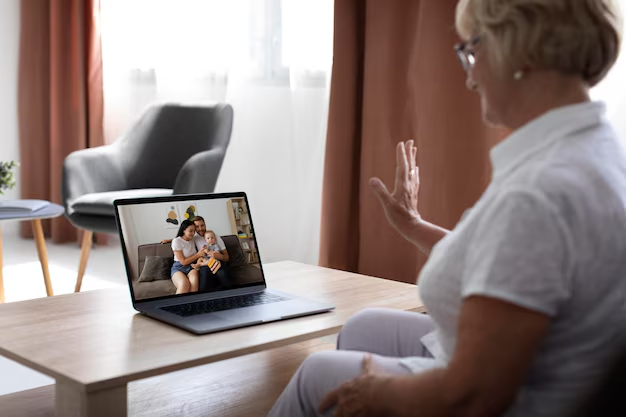
Getting help used to mean sitting in a waiting room, hoping no one you knew walked past. For a lot of people, that small but real anxiety was enough to put off booking anything at all. It kept therapy as something other people did — people with the time, the money, and the courage to walk through that door.
Things have shifted. Therapy sessions online have quietly removed some of those older barriers, and the people turning to them aren’t doing so reluctantly — many actually prefer it. That’s worth unpacking, because it’s not just about convenience. It’s about what makes it easier to actually show up, week after week, and do the work.

The Shift to Online Therapy Is About More Than Logistics
Access was always the real problem
Geographical location has long shaped who gets meaningful mental health support. Someone living in a rural area, or a city where wait lists stretch to six months, has different options than someone with a well-resourced clinic ten minutes away. Online therapy doesn’t fix every inequality in mental healthcare — but it does collapse some of the most stubborn distance-related ones.
People with disabilities, chronic illness, or caring responsibilities have also found it genuinely life-changing to not need to factor in travel. For a parent with young children, or someone managing a physical health condition alongside their mental one, the ability to open a laptop at home rather than arrange transport makes regular attendance far more realistic.
Comfort changes what you’re willing to say
There’s something about being in your own space that makes it easier to be honest. Several therapists have noted that clients open up faster in online sessions — not because the connection is deeper, but because the environment is more familiar. You’re not adjusting to someone else’s office. You’re already somewhere you feel safe.
Self-Esteem Therapy — What It Actually Involves
It’s not about positive affirmations
There’s a version of self-esteem work that gets mocked, rightly, because it’s shallow. Repeating “I am enough” in a mirror doesn’t restructure the beliefs that were built up over years of criticism, neglect, or comparison. Real self esteem therapy is slower, more uncomfortable, and more interesting than that.
It typically involves identifying where low self-worth came from — the specific experiences, relationships, or messages that shaped how someone sees themselves. Then it works on those roots, not just the symptoms. Cognitive behavioural approaches help challenge distorted thinking patterns. Psychodynamic work explores how earlier experiences created blueprints that still run in the background. Neither is magic. Both take time.
Why people seek it out
Low self-esteem rarely announces itself clearly. It shows up in the way someone can’t take a compliment, or keeps themselves small in relationships, or sabotages opportunities they genuinely want. It often looks like depression or anxiety from the outside — and sometimes those things are tangled together. A good therapist will help untangle what’s what.
People come to self-esteem work after a breakup, after a redundancy, after years of feeling that everyone else has figured something out that they haven’t. Some come because they’re tired of how they talk to themselves. That last one — the inner critic — is often the most exhausting thing to live with.
How to Make the Most of Online Sessions
Treat the logistics like they matter
Online therapy works best when you treat it with the same intention you’d bring to an in-person appointment. That means finding a quiet space, closing other tabs, and not doing it from your car between meetings. The barrier to casualness is real — because it feels like “just a call” — but the outcomes are better when you give it the space it deserves.
Be honest about what isn’t working
If you’re three sessions in and something feels off — the approach, the fit, the style of the therapist — say so. Good therapists don’t take this personally. It’s actually clinical information. How you handle conflict or difficulty in the therapeutic relationship often mirrors how you handle it elsewhere. That feedback loop is part of the work.
Services like Hush Tellus are built around exactly this kind of careful, person-centred approach — matching people with therapists who suit their needs, and making the process of finding help feel less daunting from the start.
Give it enough time
Six sessions is often where people start seeing the shape of something. Real change — in how you relate to yourself, in the beliefs you carry — usually takes longer. That’s not a criticism of the pace, it’s just honest. The things that need untangling didn’t form overnight, and they won’t undo themselves in a few weeks. But they do undo, with the right support.
What to Look For When Choosing a Therapist
Qualifications and professional registration
In the UK, look for therapists registered with the BACP, UKCP, or BPS. These bodies have codes of practice and complaints procedures. Registration doesn’t guarantee a perfect fit, but it does mean a baseline of professional accountability that unregistered practitioners don’t have.
Approach and specialism
Therapeutic modalities work differently for different people and different problems. Someone dealing primarily with negative self-talk might benefit from CBT. Someone whose low self-worth feels more connected to early childhood experiences might find psychodynamic work more useful. It’s worth asking a prospective therapist what their approach is and how they’d work with your specific concerns — not as a test, but because their answer will tell you something about whether they’re the right fit.
The first session as a two-way assessment
Many therapists offer an initial consultation, and this goes both ways. You’re being assessed, yes — but you’re also assessing them. Do you feel heard? Do they ask good questions? Do you leave feeling understood, or slightly more confused than when you arrived? Trust your instincts here. The relationship is the container for everything else.
Conclusion
Getting support for your mental health has never required as little friction as it does now. Therapy sessions online have genuinely changed who can access meaningful help — and for many people, the flexibility and comfort of working from home has made them more willing to start, and more consistent about continuing. Whether you’re looking to address self-esteem, anxiety, or simply the weight of feeling like you’re not quite managing — that support exists, it’s accessible, and it works. The hardest part, for most people, is still just deciding to begin.

